A newly released poll comparing America’s First Ladies has reignited a familiar conversation—how history remembers the women who stood beside presidents, and how the present judges those still in the spotlight.
This time, the results have drawn particular attention to Melania Trump, whose public image continues to sit in a complicated space. Neither widely embraced nor entirely rejected, she appears to reflect the broader divisions shaping modern American politics.
The survey, conducted among 2,255 U.S. citizens, placed Melania alongside some of the most iconic figures to ever hold the role, including Michelle Obama and Jacqueline Kennedy Onassis. In such company, expectations were inevitably high—perhaps unrealistically so.
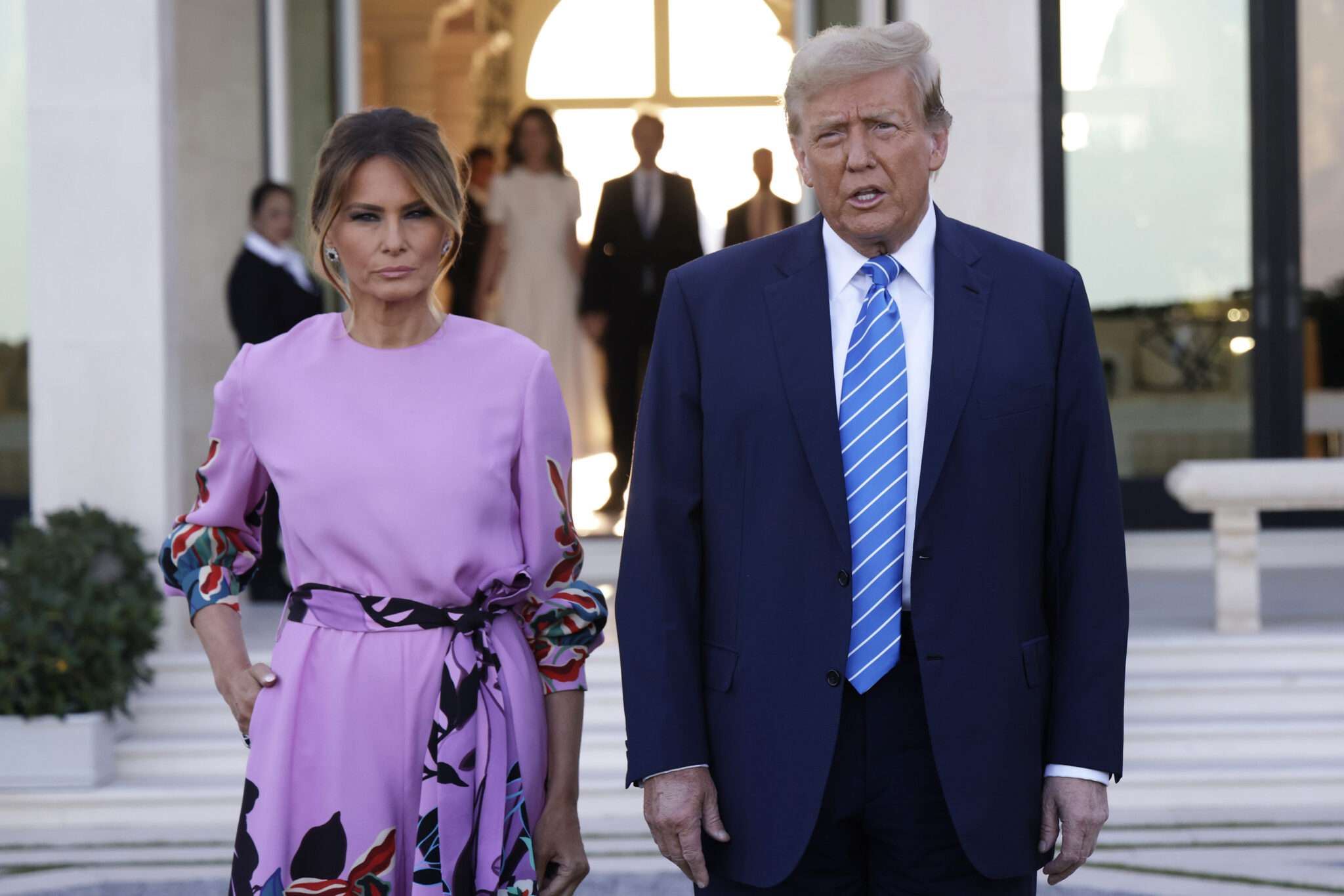
Unlike many of her predecessors, Melania has maintained a notably reserved presence during and after her time in the White House. While her husband, Donald Trump, has remained a constant and polarizing force in public discourse, she has often chosen distance over visibility. That contrast has shaped how she is perceived—less defined by public initiatives and more by mystery.
According to data from YouGov, Melania holds a net approval rating of -16. This places her behind Jill Biden, who stands at -9, but slightly ahead of Hillary Clinton, who recorded -17—the lowest among those measured.
At first glance, those numbers may seem striking, but they also reflect a broader trend. In today’s political climate, negative ratings are not unusual. Public figures, particularly those tied to high-profile administrations, are increasingly evaluated through sharply divided lenses. Approval often depends less on individual actions and more on political alignment.